Wednesday, 3 May 2017

                     Dementia-friendly Housing Charter and GreenSquare's Role therein.


Hi Everybody. Hope you all had a good Easter and like myself are now recovering from the almost non-stop onslaught of chocolate eggs.


With Dementia Awareness week starting on the 14th May, I thought now would be a good idea to look at what is needed to make housing more dementia friendly and how GreenSquare can help this take shape.


Early last month, the Alzheimer's Society published the Dementia-friendly housing charter.


This looked at the difference that suitable housing can make, the scale of the challenge and what committing to the charter means.


The aims and objectives of the charter seeks to make the housing sector, including housing organisations, corporate bodies and sector professionals, aware of the challenges of people living with dementia so that it can improve home environments for people with the condition.


Housing, it's design and supporting services, can subsequently help to improve and maintain the wellbeing of people affected by dementia by taking the following actions :
  • Engagement with a wide range of stakeholders within the housing sector to encourage increased awareness of the contribution of housing to the challenges posed by dementia.
  • Provision of relevant resources and examples of good practice to encourage their integration into all aspects of people (staff), places and processes.
By equipping housing sector professionals with information and additional resources, the charter aims to improve knowledge and understanding of dementia so that all projects consider ways of minimising risks and enhancing wellbeing for people living with dementia. This resource cab be used to influence and support all target audiences.


Who is the charter for?


The charter is aimed at the full range of professionals working in the housing sector, from planners and architects to landlords and developers, housing managers and handypersons. It is designed to help all professionals support people living with dementia in their homes and facilitate consistency and good practice.
Organisations are encouraged to improve existing action plans or develop new ones in order to future-proof their organisations and services, and sign up to deliver a number of the commitment statements within the charter.


So I hear you say, what can a housing association do to support their tenants to live with dementia.
Well this is what Waltham Forest Housing Association (WFHA) did.
  1. It appointed Dementia Champions - operational and strategic- who lead the integration of dementia into all work processes rather than treat it as a separate topic.
  2. It audited properties as part of estate inspections and support planning to give them a broad knowledge, from which an internal action plan was developed which is reviewed and updated regularly (at least every 6 months)
  3. It set up Waltham Forest Dementia Action Alliance and currently chair this group
  4. It trained all staff on the Board and the main contractors as Dementia Friends.
  5. It introduced the Sunshine Club to raise awareness with tenants at fun sessions: they meet once a month for activities such as pamper sessions, arts and crafts, fitness and black history celebrations
  6. It developed a dementia-friendly specification for works on empty properties
  7. It incorporated dementia design into it's cyclical and planned maintenance programmes
Within it's community WFHA works with Leyton Orient FC, who for the third year have dedicated a match to raising awareness of dementia.


So how does GreenSquare match up with this?


  1. It has appointed a Dementia Champion (my good self) to raise awareness of the subject.
  2. It is part of the Gloucester Dementia Action Alliance and I am one of the co-chairs of the group.
  3. It has run Lunch and Learns for staff to raise awareness of the subject via Dementia Friends sessions in Gloucester, Chippenham and Oxford.
Gloucester Dementia Action Alliance has already received funds from Gloucester Rugby Club from their game against Worcester, where they kindly sold dementia wristbands in order to raise funds and the profile of the Gloucester Dementia Action Alliance.


So we've managed to already hit 3 of the 7 goals within the housing association charter that WFHA incorporated as well as establishing links within the community's largest sporting establishment. Not bad considering we've only really been doing this from September of 2016. Let's look at the other goals set by WFHA and see if we can achieve this within the forthcoming year.


Why sign up to the charter?


"By 2020, we would like to see an increased number of people with dementia being able to live longer in their own homes when it is in their interests to do so, with a greater focus on independent living" - Prime Minister's challenge on dementia 2020.


The number of people with dementia is increasing. This presents challenges to society as a whole and has specific implications for the housing industry.


By recognising this, and by committing to the charter, organisations will publicly announce their agreement to deliver on a number of statements which they will commit to in ways appropriate to their size, state of maturity and the level of available resources in the organisation.


The benefits of signing the charter include :
  •  demonstrating leadership within the sector by proactively addressing the societal challenges posed by an increasing incidence of dementia.
  • increased awareness of how dementia and it's challenges affect the services and products that an organisation offers.
  • ensuring that the needs of customers are met in a consistent and appropriate manner
  • creating an organisation in which customers feel comfortable discussing their needs
  • being perceived by partners as dementia friendly, which may enhance reputation
Over the last decade, a significant amount of work has been undertaken to understand how physical spaces and design can be developed, constructed and managed to help people living with dementia to live well in all types of housing.
There is an increased need and demand for suitable housing for older people, including those living with dementia. This charter draws on relevant research and learning into a single guidance document and signposts to additional resources.


This charter is a key deliverable of the Prime Minister's challenge on dementia 2020 which calls on sectors to explore ways in which they can provide a more dementia-friendly approach and to produce guidance and share best practice across sectors.


Housing is also a key area for action outlined in the creation of a dementia-friendly community as dictated by the BSI  code of practice.


As well as providing guidance, the dementia-friendly housing charter contains commitments that we encourage organisations to sign up to. By committing to the charter, organisations will publicly announce their agreement to deliver on the commitment statements that are most relevant to them.


What the charter is also involved with is creating dementia-friendly communities. A dementia-friendly community is a city, town or village where people with dementia are understood, respected and supported. It's a place where they can feel confident that they can contribute to the community life. In a dementia-friendly community, people will be aware of and understand dementia, and people with dementia will feel included and involved, and will have choice and control over their day to day lives.


The difference that suitable housing can make.


Image result for images of the pig in the brick house and the big bad wolf


Two thirds of people with dementia in the UK live in their own home in the community, with one third living on their own. Approximately one third of people living with dementia are in a housing with care setting.


Housing and housing related services can play an important role in ensuring that people living with dementia and their families and carers, live happier, healthier and more independent lives.


It is not just specialist supported housing providers and those involved with adaptations who can play an important role in this - other organisations can make a significant contribution. This includes those with aspects such as the design of space in ordinary housing, or training staff in all housing professions to understand the needs of those with dementia.


Essentially, all housing and housing-related services can ensure that people living with dementia  and their carers can reach the outcomes outlined in the National dementia declaration.


The National Dementia Declaration 2009


This identified 7 outcomes that people living with dementia and their carers would like to see in their lives:
  1. I have personal choices and control over the decisions that affect me.
  2. I know that services are designed around me, my needs and my carer's needs.
  3. I have support that helps me live my life.
  4. I have the knowledge and know-how to get what I need.
  5. I live in an enabling and supportive environment where I feel valued and understood.
  6. I have a sense of belonging and of being a valued party of family, community and civic life.
  7. I know there is research going on which delivers a better life for me now and hope for the future.
In order to see this happen, it is vital for the housing sector to :
  • ensure that policies incorporate the need to provide suitable housing for people living with dementia
  • encourage the adoption of good practice in providing housing  and housing-related services for people living with dementia, wherever they live
  • ensure that all stakeholders identify what they are able to contribute towards developing and maintaining dementia-friendly communities
  • promote awareness of dementia and how living well can help reduce social exclusion and discrimination
The scale of the challenge


Related image


Improving the different areas of housing to help support people with dementia requires many hundreds of thousands of people working across the housing sector, as well as involvement from many other stakeholders. Working together to understand and address the wide range of issues people with dementia face, they can create the change needed.


Key Facts about Housing and People with Dementia


Here are some key facts about housing and people living with dementia


  • There is only enough specialist housing to accommodate 5% of the over 65 population
  • Two thirds of people with dementia live in the community, mostly in mainstream housing, a third live on their own, predominantly in the owner occupied sector
  • 2 million older households are living in non-decent homes
  • 95% of homes lack even basic accessibility features
  • Home adaptations improved the quality of life for 90% of recipients as well as carers
  • An Alzheimer's Society report found that more needed to be done to ensure homes were designed and built with the needs of people affected by dementia in mind
  • The International Longevity Centre UK has predicted that a shortage of 160,000 retirement housing by 2030 and that by 2050, the gap could grow to 376,000
Influencing Policy and Decision Making


The charter can also be used to influence policy and decision-making by the following bodies in regards to their work within the housing sector:
  • local authority and commissioning bodies
  • adult social care services
  • clinical commissioning groups/primary care services
  • NHS hospital trusts (acute health services)
  • estate agents and property management companies
  • other local networks, organisations and partners
  • regulators and funders
The following services are not considered within the scope of this charter:
  • care homes
  • hospices
  • independent homecare organisations (other than those delivering care in specialist houses)
Follow the following site to see what is happening in Wales regarding award winning dementia housing http://www.housingcare.org/housing-care/facility-info-158842-llys-jasmine-mold-wales.aspx


What does committing to the charter mean?


Image result for images of committing to charters

By signing the charter, your organisation undertakes an important 2 step process


  1. Sign up to the charter and commitments - You will sign up to the charter through the Alzheimer's Society website. Using your communication channels, you should then publicly announce your intention to deliver on the relevant charter commitment statements. Incorporate specific actions into your Dementia Action Alliance action plan if applicable.
  2. Delivery of the commitments specific to your stakeholder group within a set, individually determined and planned time-frame.
A commitment to this charter will involve selecting a senior member of staff to champion the initiative and ensure that the appropriate delivery plan is established and progressed with the object of completing the identified commitments.
You should provide evidence on your progress and report back on this and your outcomes on the identified commitment statements.
A commitment to the charter should also ensure that housing for people with dementia features in any of your housing policy, asset management and commissioning discussions.


Housing organisations should act as ambassadors for dementia-friendly communities and build relationships with local stakeholders to encourage them to adopt dementia-friendly practices.


So that's the Dementia Friendly Housing Charter but are there any other models that we could learn from.


Image result for images of a pint of beer


Maybe we could do with a bit of Dutch Courage.


Presenting Hogeweyk


Dementia Village - De Hogeweyk - Weesp (The Netherlands)


Hogeweyk is a revolutionary village in Weesp, Holland that has a unique and pioneering care facility for elderly people with dementia.

Hogeweyk’s view on care is founded in day to day life in society. In normal society living means having your own space to live and managing your own household. People live together with other people sharing the same ideas and values in life. This makes the place where one lives a home. Hogeweyk residents have already lived a life where they shaped their own life, where they made choices about their own household and standards. The fact that a resident cannot function “normally” in certain areas, being handicapped by dementia, does not mean that they no longer have a valid opinion on their day to day life and surroundings. The residents opinion on life, housing, values and standards determine their “lifestyle”. There are 7 lifestyles defined in Hogeweyk: urban, artisan, Indonesian, homey, Goois, cultural and Christian. Every Hogeweyk home houses six to eight people with the same lifestyle. This lifestyle can be seen in the decor and layout of the house, the interaction in the group and with the members of staff, day to day activity and the way these activities are carried out. Every house manages its own household with a permanent staff. Another aspect of normal living is being able to move freely inside the house AND outside. A normal house in a normal village in a safe environment gives the residents of Hogeweyk this freedom in safety.

 The Hogeweyk (part of Hogewey care centre. A weyk or wijk being a group of houses, similar to a village) is a specially designed village with 23 houses for 152 dementia-suffering seniors. The elderly all need nursing home facilities and live in houses differentiated by lifestyle. Hogeweyk offers 7 different lifestyles: Goois (upper class), homey, Christian, artisan, Indonesian and cultural. The residents manage their own households together with a constant team of staff members. Washing, cooking and so on is done every day in all of the houses. Daily groceries are done in the Hogeweyk supermarket . Hogeweyk offers its dementia-suffering inhabitants maximum privacy and autonomy. The village has streets, squares, gardens and a park where the residents can safely roam free. Just like any other village Hogeweyk offers a selection of facilities, like a restaurant, a bar and a theatre. These facilities can be used by Hogeweyk residents AND residents of the surrounding neighbourhoods. Everybody is welcome to come in!
If you would like to know more about Hogeweyk then follow the link http://hogeweyk.dementiavillage.com/en/

This is something we could look at exploring in England as it's unique selling point is the lack of anxieties and general state of happiness of it's residents.

And that about covers this blog. If you would like to know more then please feel free to either leave comments or contact me at GreenSquare.


Friday, 17 February 2017

Where Did You Go?

Hi All,


Just to let you all know that Jay James Jones (director of the film Where Did You Go?) will be on Radio Gloucestershire at 2pm today. Jay's film explores one woman's journey through Lewy Body Dementia and will be up for numerous awards in the short film category. Keep an eye out for this ground-breaking exploration of a heart breaking condition.


Jay is a member of the Gloucester Dementia Action Alliance (GDAA) and we are looking to commission him for a future project that I covered in last month's blog. Spoke to Jay earlier to wish him luck and he's going to give a shout out for the GDAA to try and attract potential funders.


In the meantime here's the link to the trailer.


http://stroudcommunity.tv/wheredidyougo/


Where


Until later my fellow dementia friends.


Tuesday, 7 February 2017

Dementia Action Alliances

Hi All,


Hope you all have enjoyed the season's festivities and are keeping up with all those New Year resolutions. (Mine is to shift the Christmas indulgences from my waistline)
In this blog, I would like to talk to you about Dementia Action Alliances and the roles that they play within your local communities.


Image result for dementia action alliance logo


Who are they?


Dementia Action Alliances were set up in 2010 with the launch of the National Dementia Declaration  to help bring together organisations across England to commit to improving social care outcomes for people living with dementia, and those who care for them.
They are made up of over 150 organisations across England who connect, share best practice and take action on dementia. Everything they do is in partnership, and informed by people living with dementia and those that care for them. The commitments made by these organisations is set up to radically improve the lives of people living with dementia. Using their collective experiences they look to influence Government policy and societal attitudes towards dementia.


What do they do?


Their aim is to capture and promote best practice, enabling it to benefit many more people. They formulate action plans which are then published on their website. They also encourage members to come together to share best practice and learn from each other through regular events - from conferences and expert-led round tables to workshops and webinars.
They campaign on major issues within health and social care to create system-wide change, and ensure that dementia does not prevent people living the lives they wish to.


So what are the benefits of being a member?


  • Access to a network of health and social care professionals.
  • Share best practice with other members, and learn from each other
  • Collaborate with people living with dementia, and those that care for them.
  • Invitations to their programme of events - which includes expert round tables, conferences and workshops.
  • Influence over Government policy and societal attitudes towards dementia
  • Campaign on the major issues in health and social care relating to people with dementia and carers.
  • Showcase yourself as an organisation committed to taking action on dementia.
  • Subscribe to their monthly newsletters, which includes updates on member activity and major trends within the sector.
  • Engage with leaders from Government and across health and social care.
  • Connect with others via their website and social media.
  • Learn from their topic led webinars, podcasts and films.
  • Opportunities to shape what they do, highlighting the issues that are important to people affected by dementia.
  • Ensure your organisation is equipped to respond to the needs of people living with dementia.


So are you involved with any Dementia Action Alliances Mark?


Well it's funny you should ask that?


Gloucester Dementia Action Alliance


I am a member of the Gloucester Dementia Action Alliance. This consists of organisations including GreenSquare, The Trinity Centre, Shared Syndicate, Gloucester VCS Alliance, Trust In You, The Uplands Care Service, Gloucestershire Fire Service, University of the West of England, Managing Memory 2gether, Age UK Gloucestershire, Gloucester Citizen, Guideposts, Gloucester Cathedral, Stroud Care, The Redwell Centre, St. Catherine's Court, Gloucester Village Agents, 2gether Trust and the Alzheimer's Society Gloucestershire.
So quite a few organisations involved as you can see.
We were charged with making Gloucester a more dementia friendly city? And we are taking this rather seriously.
We have come up with the idea of running a Dementia Interactive Project. This is an educational learning tool that puts the person attending in the role of both the person with dementia and their carer. We started looking at how we could get this project funded and what the eventual costs could be. We looked at firstly storyboarding the project, looking at venues to facilitate the project and hiring actors to play the various roles. We worked on scenarios that we thought might resonate the most for people with dementia and their carers. Then we discussed all of this at our Dementia Action Alliance Meetings.
Lee Hawthorne of the Alzheimer's Society managed to talk to Collette Finnegan of Gloucestershire City Council, who managed to link us in with Gloucester Rugby Club. Gloucester Rugby Club ordered 2.500 snap bracelets which they then sold at their next home game in support of the Alliance at £1.00 per bracelet. They all sold out and raised us a grand total of £2,500. Gloucester Rugby also will be selling more snap bracelets at their home games to raise more money and will be putting on a celebrity golf fund raiser for the DAA in the summer. We are in the process of setting up a bank account to put these monies towards the project. This is being organised by Sian Merrion-Jones, the head of our Dementia Action Alliance and will be co-signed by myself, Sian and Lee.

Gloucester DAA from left to right: Mark Derbyshire (GreenSquare), Lee Hawthorne (Alzheimer's Society) and Sian Merrion-Jones (DAA Lead)


We are looking at some crowd funding opportunities via the Internet and will be contacting Crowdfunder in relation to this.

Last night we received excellent news that the Council unanimously passed the motion that commits them to support people with dementia. Councillors from all 3 major political parties pledged their heartfelt support, which goes to show that there are certain things that cross any political divide and we at the DAA could not thank them enough. They have all pledged to help with the DAA. The Gloucester Citizen will be running with this story, with mention of what we are planning to do as a DAA, which is great publicity. Gloucester Rugby are also going to present us with a cheque of monies raised so far at one of their future home games, which again is great publicity for the cause.


Image result for images of gloucester rugby


We have also been approached by Jay Joseph Jones, director of Where Did You Go? to be commissioned to deliver the project. https://alzheimersspeaks.wordpress.com/tag/jay-joseph-jones/

If you would like to know more about the Gloucester Dementia Action Alliance then follow our Facebook link at
https://www.facebook.com/Gloucester-Dementia-Action-Alliance-642974152545287/?ref=aymt_homepage_panel


I hope this inspires you all to go out and find a bit more about Dementia Action Alliances. So much can be achieved if we all get together, create a vision and then follow it through.
I look forward to speaking to you more throughout the year.


Tuesday, 6 December 2016

The National Dementia Forum 2016

Hi All,


Well the run up to Christmas has started and I hope you're enjoying your Advent Calendars (let's not pretend we don't still have them). I'm going to give you a rundown of the National Dementia Forum and some of the exciting ideas that I came across that are being put forward at a national level.


The event was held at the Royal National Hotel in London and the first item on the agenda was how much dementia care has changed over the last 25 years. This was presented by Vic Rayner, who is the executive director of the National Care Forum


Vic looked at what was needed to make sure that the needs and provision of dementia care were met in the forthcoming years. The answer is that more needs to be done to provide leadership and invest in staff.
Vic then went on to look at dementia policy and the prime minister's dementia challenge, which to those that don't know is that by 2020, the UK is to be the leading country in the world for people with dementia, their carers and families to receive support in and also the best country in the world for dementia research. This is an admirable aim but can only be achieved by all services coming together to work holistically with communities and families. This where the role of Dementia Action Alliances comes to the forefront on how we perceive dementia and what we can do to educate people in how best to help someone with dementia and the way that dementia operates.
Vic then spoke about how active listening can help when communicating with someone with dementia. Those of you that attended my Dementia Friends Training Course will already be familiar with this, but for those that didn't this is to do with the way that body language and posture can play a big part in the way that we communicate with someone with dementia. Giving the person time to respond and establishing their preferred method of communication is paramount to promoting effective communication and can greatly reduce the number of negative outcome incidents associated with dementia.
Vic then discussed the issues if equality for people with dementia that might be experiencing issues around poverty, sexuality, race, age, gender and health. This was quite relevant given the changes in the law and people's attitudes over the past 30 years; and the way that someone with advancing dementia might feel fear being in one of these groups given some of the prejudices that existed back then. It is important that when faced with someone with dementia that is experiencing these fears, that we acknowledge that the fear is very real before offering reassurance. That way the person with dementia feels listened to and will help in building trust between the person with dementia and the carer/family member.
Vic then looked at how we can transfer power into communities to get feedback and offer solutions to the very real problems that they are facing when having to cope with dementia related issues. This again focused on the work that Dementia Action Alliances provide alongside useful meeting places such as Dementia Cafes and Carers Associations to discuss shared experiences and common problems. Alzheimer's Society and Age UK are dedicated to providing information and help for people that wish to know more on the subject and are useful allies in the dissemination of information required to realise the Prime Minister's Dementia Challenge. This tied in nicely with Vic's next point of how we train staff in the care sector to promote person centred approaches to service users and also how we can educate family members to help them cope better with some of the many challenges that looking after someone with dementia might face. We explored some of the technology available in helping with dementia from 3D interactive experiences through to the use of something as simple as a twiddle-muff.
The final part of Vic's presentation focused on some of the benefits of good nutrition in the diet of someone with dementia. There has been studies to show that good nutrition can slow down the advancement of dementia. Food such as fish, steak and green vegetables are rich in Omega 3 and this can help promote good brain function. Other sources of good nutrition included coconut oil, soya beans and the use of turmeric in cooking.


The next presentation was by Dr Karen Harrison-Dening, Head of Research and Evaluation at Dementia UK and this covered end of life palliative care in the field of dementia.


Karen identified that  over 700,000 people in the UK have a form of dementia and that 30% of people over the age of 60 will die from or with dementia.
Alzheimer's disease is the biggest killer of women over the age of 60 at 13.4%.
The sad truth is that people with dementia, particularly those in the advanced stages tend to receive poor end of life care and this needs to change. Conversely it is rare that someone with dementia will receive hospice or palliative care as the disease is not perceived as a terminal illness. This means that a lot of the spiritual needs that someone would expect in end of life care are not being met.
The report also highlighted a failure of stakeholders to work together alongside a poor knowledge surrounding dementia by GP's as causes as to why people with dementia are experiencing poor levels of care.
In 2013, Dementia UK commissioned a report into the Future of Hospice Care to include those with non-malignant diseases, such as dementia. They also looked at special interest groups such as Admiral Nursing to improve dementia services and provide support and knowledge to other services.
This was split into five categories:
1. Generating Ideas.
2. Discussion
3. Further generation of ideas.
4. Discussion and generation of themes.
5. Ranking/Prioritisation.
Of the 15 themes generated in total the top 5 were:
1. Communication - this looked at not just communicating with a person with dementia during a distressed episode and recognising that everyone is different but also communicating with the person with dementia's carer also.
2. Pain Assessment and Management - this included how to understand assessing and managing pain, pain management for distressed behaviours and pain education which highlighted not just seeing and treating agitation.
3. Understanding issues for care in different settings - this explored having a shared ethos between hospices and care homes and looked at staffing levels within dementia care.
4. Education of the wider team (cascade) - this looked at sharing ideas and experiences between the different care settings
5. How to influence local policy and strategy - this looed at ways of getting management and clinical commissioning groups on board, making a case for people with dementia to access hospice care and dementia to be thought about and funded as seriously as cancer.
The outcome of this was to increase the number of  Community of Practice (CoP) meetings per annum, plans to develop a website to share information and develop ideas. Develop an evaluation plan to measure the output of the CoP and to develop interest in the CoP from other areas and countries.
There have been 3 CoP meetings already in 2016, there are 180 members, 3 publications and 1 conference abstract submission.


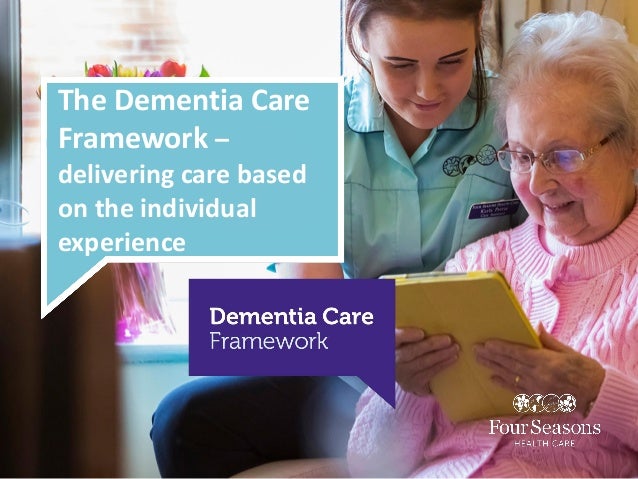
The next speaker was Dr Clare Royston of Four Seasons Health Care.


Clare spoke of a new approach to dementia care that promoted a set of values and actions to support special resident experiences. Their ethos is to improve the lives of their residents and the communities that they serve by delivering specialist residential experiences and by being the best place to work in the sector.
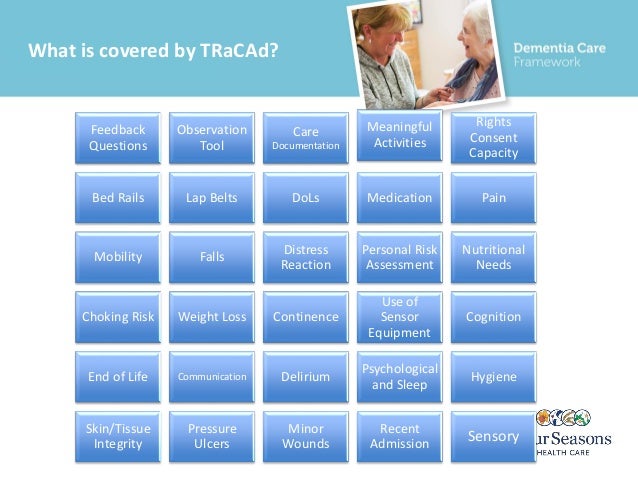
Four Seasons base their practice around the individual experience and operate a find and fix approach to their service delivery. This incorporates the capturing of live information via iPads. This results in 10,000 pieces of information captured every month which is affecting the resolution time of issues from 12 to 5 days and is increasing customer satisfaction. This is all developed alongside current national guidelines and best practice.

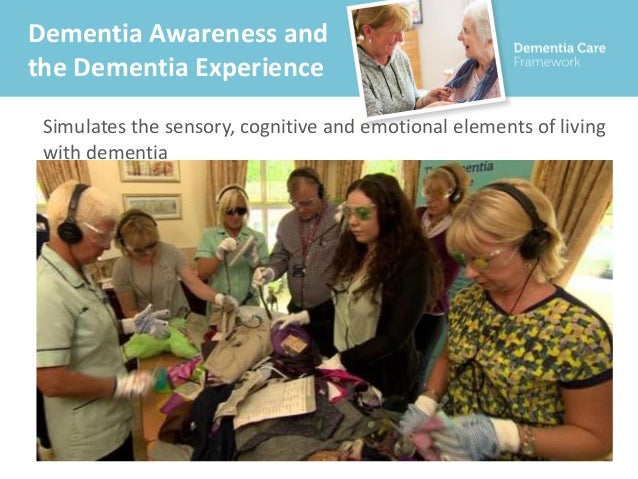
This is the screen that care providers and residents will use to log any issues in these areas. Staff are trained in using these devices and passing this expertise on to the resident population. By focusing on the needs of the individual, this is addressing more pertinent issues than traditional broad based training. Four Seasons also use the sensory experience to help staff understand the issues surrounding dementia and the frustrations that can be felt by a person with dementia.

Four Seasons also launched a Resident's and Families Charter. This looks at what is important to a resident and their families to produce a charter that connects directly to the way that the team delivers care. This is then linked into the Resident Experience Statements to look at the outcomes that have been produced.
The Residents Charter has 5 principles, which are:
1. Use what you learn about me to support me.
2. Call me by the name I know and prefer.
3. Listen to my wishes, preferences and concerns and support me to have my say.
4. Understand how I want to be cared for and if you have to make decisions for me, you strive to include me in doing what is best for me.
5. Help me to communicate with others.
The Families Charter also has 5 principles, which are:
1. Help me understand any changes in my relative's health and wellbeing and the care provided.
2. Listen to my thoughts and acknowledge and act upon any concerns and suggestions I may have.
3. Say sorry and put it right if you don't get it right.
4. Engage with me so that you fully understand my relative's personality, background, hobbies, likes and dislikes.
5. Support me to keep my emotional connection with my relative and spend quality time together.


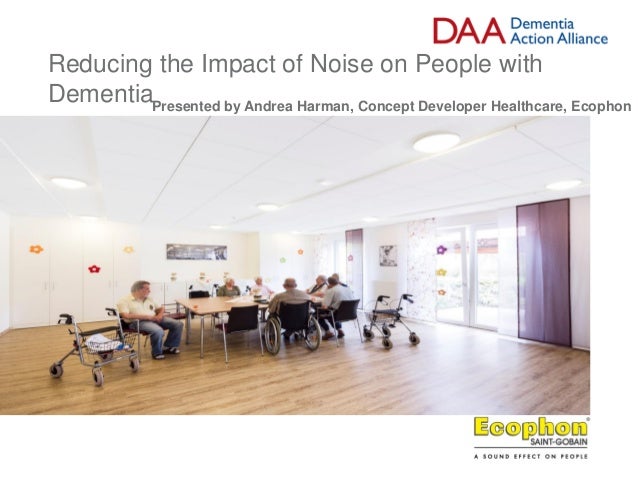
The next presentation was carried out by Andrea Harman, a concept developer in healthcare for Saint Gobain Echophon which looked at the effect that noise has on a person with dementia.

This looked at what noise is and started with an exercise where different pitches were played around the room and dependent on your age, you could either hear the noise or not.
The description of noise is that it is an unwanted sound and that sound is a form of energy. Noise is also recognised as a source of stress and can cause a physiological reaction in the body. It also is shown that one can suffer a psychological reaction. It has an impact on intellectual performances such as writing and logical functioning. It is a major disruptor of sleep patterns.
Quiet, on the other hand, is recognised as one of the physical aspects of comfort.
As we age, we lose our high frequency hearing and become more sensitive to other frequencies of sound. Low frequency sounds are often linked to annoyance, aggression and fear. This can be anything from lorries to thunder to drums to factory/machine noise.
We struggle to hear what is being said in a noisy environment and this can lead to problems with communication. We can usually pick out consonants but vowels tend to be lost. This is because consonants contain the information in speech.
Of all the senses, hearing is the one that has the most significant impact on the quality of life for a person with dementia. A noisy or reverberant environment can be extremely uncomfortable for a person with dementia and can prevent good communication.
Difficulties in hearing, remembering and communicating contribute to the person with dementia engaging with their environment and people in it and can lead to social isolation. High noise levels in the living rooms of care homes were associated with low behavioural signs of social interaction. It has been shown that good room acoustics can make a real difference.
Things that affect room acoustics  can be anything from shape, size, surface finishes and furnishings. Dementia friendly acoustics should consider where clear speech is important and where noise needs to be reduced or absorbed. Provide areas where people with dementia can seek respite if necessary. It has been shown that corridor noise is often a source of problems.
Positive sounds for people with dementia are often things that are found in nature. These can be things such as birdsong, flowing water and light rain. Music can also provide a positive sound for people with dementia, especially songs from the person with dementia's youth.
There is a strong case for adding sound absorption to rooms within a dementia care facility. Studies have shown that where acoustics are poor, people with dementia can be confused as to where the noise is coming from, have difficulty in engaging in conversations and were being disturbed by the noise reaching their bedrooms. When sound absorption was added, the people with dementia were observed to be far more settled, were engaging in more conversations and were having more settled sleep patterns.


The next presentation was carried out by Carole Henderson, who is the manager of Grief Recovery UK. This covered the area of grief in dementia care and why this is often overlooked in relation to dementia care. This was mainly about addressing the elephant in the room and focused on ways to explore the subject of grief. To find out more follow the link provided www.griefrecovery.co.uk


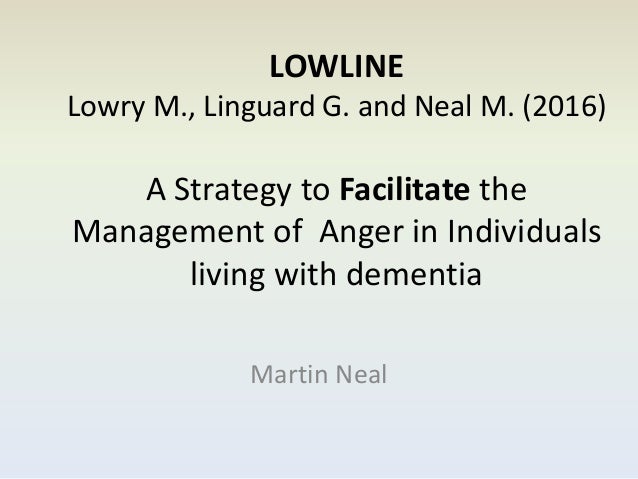
The next presentation was by Martin Neal, a lecturer in mental health and dementia studies from the University of Bradford. Martin looked at anger issues surrounding dementia and how to work with them.

Martin explored how anger is often a situation that carer's and relatives view to be problematic and a challenge to themselves and how to reframe this so that we could look at the repertoire of interventions that could be used to work with anger.
LOWLINE takes the approach that anger may not always be bad, that it can be an indication of an unmet need, that it can be part of a grieving process and that it can be a manifestation of fear.
What LOWLINE is not is a way to avoid managing angry individuals, a way of keeping people calm, an advanced high level intervention requiring lots of training and not just for professionals and staff.
LOWLINE looks at the benefits of active listening and reading non verbal cues and using positive body language to make a person with dementia feel listened to.
We then looked at validation theory and the works of Kitwood and Fiel, that espouse person centred approach to dementia care. Fiel looks at all behaviours having meaning and the responsibility of the person interacting with the individual to identify the meaning of the behaviours.
We then looked at The VIPS model :
. V A value base that asserts the absolute value of all human lives, regardless of age or cognitive ability
. I An Individualised approach based on uniqueness.
. P Understanding the world from the Perspective of the person with dementia.
. S Positive Social psychology in which the person living with dementia can experience relative well-being.
We also looked at Blackwell's Model that uses the acronym VERA to establish it's approach. VERA stands for :
V = Validation
E = Emotion
R = Reassure
A = Activity
This again concentrates on putting the individual first when dealing with any behavioural responses that are associated with anger.


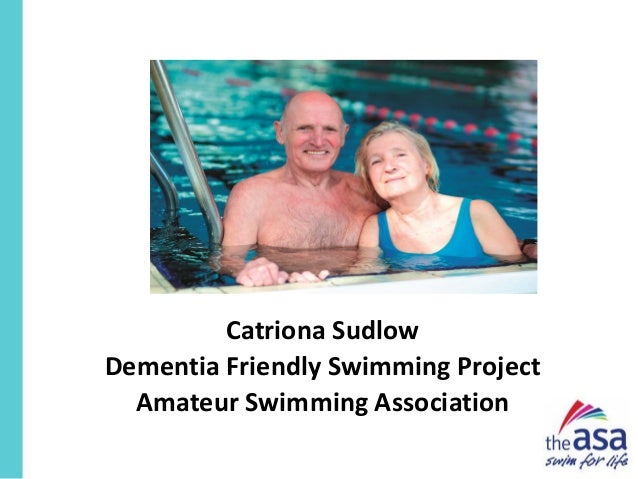
The next presentation was given by Catriona Sudlow of the Dementia Swimming Project


Catriona spoke about the potential benefits of swimming for someone with dementia. This included the value of swimming for improving insight into motivations, barriers and perceptions. Building partnerships between leisure, health and social care sectors and creating a network of dementia friendly pools.
Some of the recognised benefits of swimming include the relief of pain, independence, empowerment and social connection.
The group aims to increase dementia awareness among leisure providers. They also aim to make the service accessible, safe and supported. They carry out their own market research by getting feedback from people with dementia about their experiences in the swimming pool. They have also looked at barriers such as transport and in some area have linked in with local councils to combat this by forming transport partnerships.
To create a dementia friendly environment in the pool they have looked at things such as noise, signage, reflective surfaces, potential slip hazards, accessible changing areas and  colour and contrast.
There was then some personalised testimonies from carers and people with dementia about how much the project had benefitted them.


The next presentation was by Dr Vasilki Orgeta regarding depression in people with Early stage dementia.


This focused on the concept of IDEA (Intervention to prevent Depressive symptoms in EArly stage dementia).
People with dementia are at increased risk of depressive symptoms or depression. The presentation considered current research in the area and the development of a psychological intervention based on behavioural activation to prevent depression in people with early-stage dementia.
The theory is to schedule activities to obtain positive reinforcement, using the activity as a pleasurable experience (reward). After consultation with people with dementia, carers, home managers and relatives, the results were that being active stimulates the mind and body, that being active gives structure to the week, improves self-esteem, gives you a purpose and helps in staying calm. It helps in coping with loss and can ward off depression and  loneliness.


There was then a presentation by Julia Pitkin a Dementia Coach and trainer.

Julia presented a video of the relationship between a son and his mother. The mother was a person with dementia. The first scenario outlined the mother looking for her purse and when she could not find it, blaming the son. This had a detrimental effect on the relationship, as the son could not cope with what he perceived to be an irrational attack on him, as the mother began accusing him of stealing her money.
The session then consisted of explaining validation theory, whereby the person with dementia has their feelings acknowledged and empathetic listening is employed. In relation to the scenario, this included taking on board that the person with dementia was feeling angry because she couldn't find her purse and validating their feelings. This included making statements such as I can understand that you're angry, should we contact the bank, would you like me to help you. This helped the person to calm and then address the situation.
We then cut back to the video, where the son employed this process and it displayed how the person with dementia could then explain their feelings and the relationship was able to be rebuilt.


The next presentation was given by Aileen Jackson, a Senior Project Manager for the South London Health Innovation Network.

This presentation consisted of a paper based framework that has been developed by the South London Health Innovation Network.to help care workers identify people with dementia.


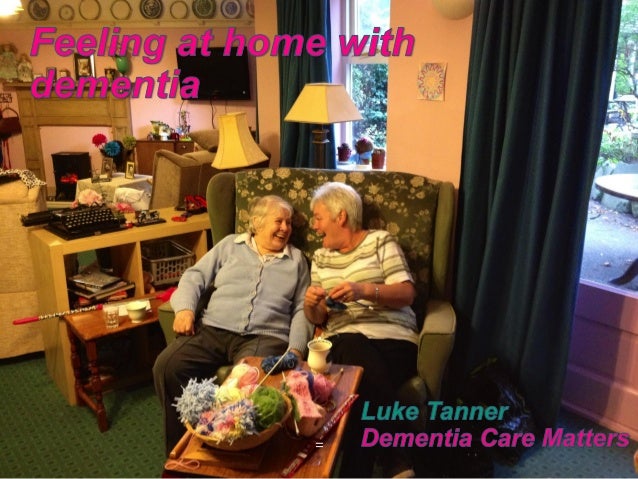
The final presentation was given by Luke Tanner, an Associate Trainer at Dementia Care Matters.


Luke started the presentation by asking what we thought of as home and the feelings associated with it.
The feelings that were explored were peacefulness, being settled, being calm, contentment, safety, security, belonging, capability, comfort, happiness, confidence, freedom and ability. It looked at home as being a place, a person or a thing that makes you feel at home in yourself.
Luke then explored some of Kitwood's theory regarding what makes a person with dementia feel valued such as comfort, inclusion, attachment, occupation and identity that culminates in a feeling of being loved. This links in to your feeling of well-being.
Luke then looked at the psychological and behavioural symptoms of dementia. This included screaming, restlessness, physical aggression, agitation, wandering, anti-social behaviour, cursing, shadowing, anxiety, depression, withdrawal, hallucinations, delusions and psychosis. We looked at how relationships affect all of these in relation as to how to regulate stress.
We then looked at how people interact, especially in relation to staff and residents. We discussed emotional intelligence and how to be responsive to people's needs and feelings. We discussed where staff could interact more and eat with people at meal times to build up more natural relationships.
We looked at the removal of uniforms and getting rid of the them and us attitude that can sometimes permeate throughout the care sector. There was discussion around 30 second conversations and 60 second activities and how this can help occupy someone with dementia.
There was then a very interesting discussion regarding clutter. As the dementia progresses having things in an orderly fashion may not be the best way for someone with dementia to access material. For example, if someone with dementia was to walk into a room and there was a set of books on a bookcase, then those books would stay there unread, whereas if a book was left open on a coffee table, the person with dementia would be more likely to nose through that book.
We then discussed challenging routine bound care by "being a butterfly". This looked at changing the moment, turning tasks into experiences, being spontaneous and going with the flow, going along with different realities, focusing more on social interaction, using stuff in interactions, staging activities  rather than running them and being aware of controlling language and behaviours.
We then looked at matching care giving to the different stages of dementia. Foe someone at the early stages of dementia it was about focusing on opportunities for domestic activities and accessing small reminiscence groups. There was an onus on creating banter during care giving interactions and greater independence in daily living tasks.
For someone experiencing a different reality there was activities such as completing half finished tasks, rummaging through boxes of their own personal items. There was an opportunity for role play as the person experiencing a different reality could carry out tasks from previous jobs and roles that were part of their reality.
Finally we looked at those in the latter stages of dementia. This included holding comfort objects such as dolls or stuffed toys. This concentrated on a soothing approach to the individual and accessing as much sensory items and equipment as needed.
The main message was that if we make a home feel like the person with dementia's home, then we can deliver a higher quality of care that is person centred in approach.


And that was the forum ended. I hope you've enjoyed reading my recap of the day and I would like to wish all of you out there a very Merry Christmas and a happy and prosperous 2017.